Nervous System
Downregulating sympathetic tone without performative speech
The goal of regulation isn't to become a human lotus flower. It's to build a system with the capacity to handle reality without catching fire.
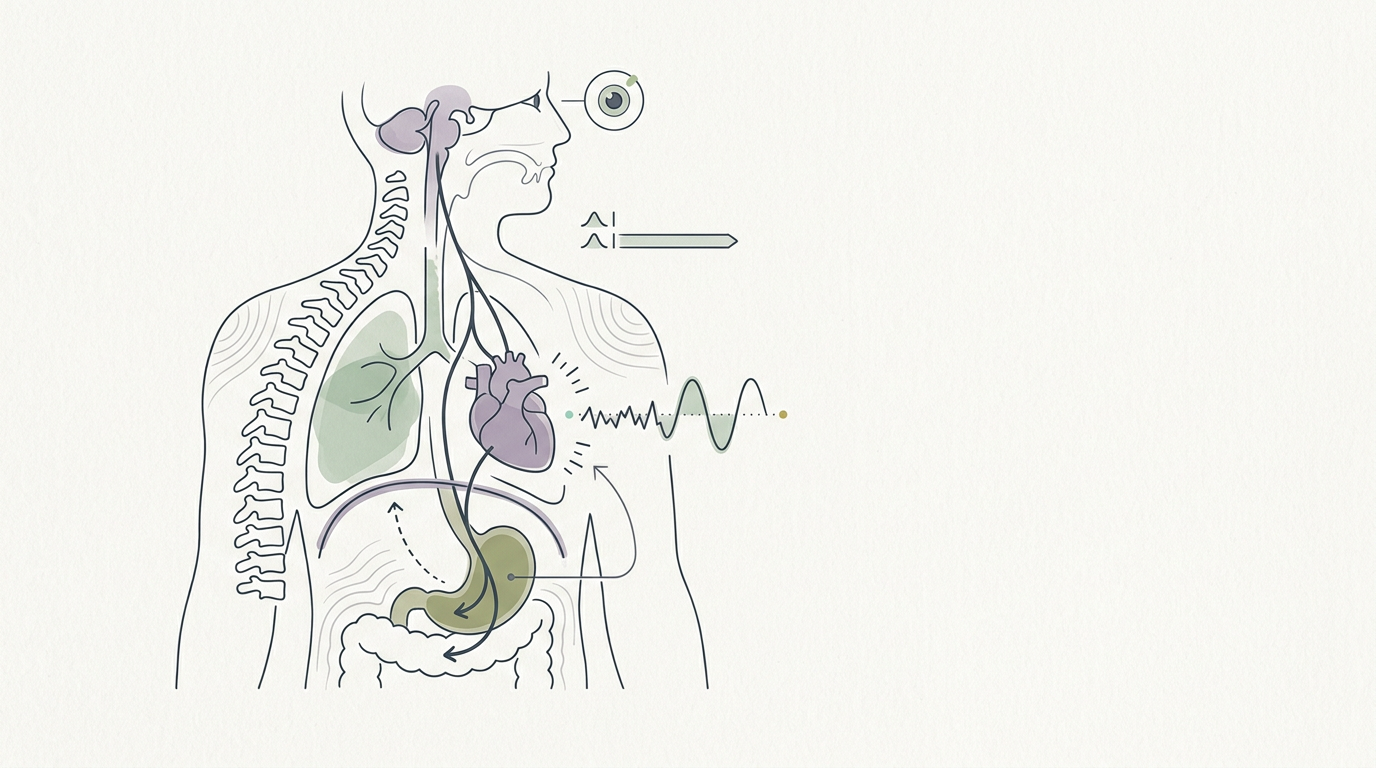
The wellness industry has sold nervous system regulation as a path to becoming a human lotus flower, perpetually serene. This is not only wrong, it’s unhelpful. The most important nervous system regulation benefits are not about achieving a state of permanent calm; they are about renovating your internal architecture so you can handle reality without chronically short-circuiting. It’s about capacity, not placidity.
You know the feeling. It’s the low-grade hum of anxiety that follows you into the weekend, the jaw you have to consciously un-clench during another video call. It’s being exhausted but can't rest, scrolling through property websites at 11pm despite having no intention of moving. You feel ‘tired but wired’, running on fumes and caffeine, and then wonder why you wake up at 3am every night with a racing heart. You’re irritable with people you love, your focus is shot, and you feel profoundly anxious for no reason, as if your body is braced for an impact that never arrives.
Common Questions
What is nervous system regulation?
It's your body's ability to manage stress and return to a state of balance. It isn't about eliminating stress, but improving your system's capacity to move through activation and settle again without getting stuck. It’s the difference between a system that bends and one that breaks.
Is nervous system regulation the same as relaxation?
No. Relaxation is a temporary state, like sitting on the sofa. Regulation is the structural integrity of the house itself. You can feel relaxed but still have a dysregulated system that flies off the handle at the first sign of pressure. The goal is resilience, not sedation.
How long does it take to see the benefits?
Some benefits, like a sense of grounding after a breathing exercise, are immediate. Lasting change to your baseline—better sleep, less reactivity, more focus—is cumulative. It's not a course you pass; it's a practice, like strength training. The consistency is what rebuilds the architecture.
Related anchors: sleep anchor · wired-tired anchor · performance anchor
The real nervous system regulation benefits (and why they aren't 'calm')
Let's dispense with the primary cliché: the goal of regulation is not to feel 'calm'. Calm is a feeling, and a fleeting one at that. The real goal is capacity. It's building a system robust enough to handle a difficult conversation, a project deadline, or a week of joint-family obligations without going completely offline.
Every stressor, small or large, trips your HPA axis (the stress-hormone control loop running from brain to adrenal glands). When this happens constantly without adequate recovery, you accumulate allostatic load—the physiological wear and tear from chronic stress. The tangible benefit of regulation is reducing this load. It’s not about never feeling stressed; it’s about your system returning to baseline faster. It's the difference between a five-minute spike of anger and a full day ruined by it. It's being able to take your paid time off without spending the first three days riddled with anxiety.
A regulated nervous system doesn't stop the waves from coming; it teaches you how to surf.
This is why 'just relax' is the most useless advice ever given. You can't command a system running on emergency cortisol to stand down. You have to give it a signal it understands. The simplest is the physiological sigh: a double inhale through the nose, followed by a long, slow exhale through the mouth. This is not a mindset hack; it's a direct message to your brainstem to apply the brakes. It works in seconds and costs nothing.
Your brain's over-caffeinated intern: the locus coeruleus
If you've ever felt 'tired but wired', you've met your locus coeruleus. Think of it as an over-eager, perpetually caffeinated intern in your brainstem. It’s the primary source of noradrenaline, the neurotransmitter responsible for alertness, focus, and arousal. When it's working well, it helps you wake up and pay attention. When it's dysregulated, it's a menace.
A chronically stressed system keeps the locus coeruleus on high alert. It fires erratically, giving you jolts of anxiety for no reason and making it impossible to settle. This is the mechanism behind waking up at 3am with your mind racing. Your body is exhausted, but this tiny cluster of neurons is still screaming 'Threat!'. It's the engine driving the '5-to-9 after the 9-to-5' hustle that leaves you depleted, or the reason you can't switch off after a late-night social engagement in Dubai, even when you're desperate for sleep.
Down-regulating this structure is not a matter of willpower. It responds to physiological inputs, not positive affirmations. Slow, rhythmic breathing—particularly extending the exhale—is one of the most powerful signals you can send. This pacing directly inhibits the firing of the locus coeruleus. It tells the over-caffeinated intern to take a break. This isn't magic; it's mechanics. You are using your breath to change your brain chemistry, creating the conditions for rest rather than just wishing for it.
What to do this week
- The Two-Sigh Reset. Before you open your laptop, before you join a call, and before you reply to that email. Inhale through the nose, then a second short inhale to fill the lungs, then a long, slow exhale through the mouth. Do it twice. That’s it.
- Name the Texture. Three times a day, pause and ask: 'What am I feeling in my body right now?' Don't judge it, just notice it. A tight jaw? A hollow feeling in your stomach? Shoulders up by your ears? This is the first step of building the interoceptive awareness Kokorology teach in the Journal.
- Eat One Meal Without a Screen. No phone, no laptop, no television. Just you and the food. Notice the taste, the temperature. This is a small act of down-regulation that costs nothing and takes no extra time.
Where this fits in the Kokorology system
This isn't a one-off trick. It’s the entry point to a fundamental understanding of your own architecture. The practice of regulation is the bedrock of the entire system, explored in depth in the Regulation L1 course. You can track your own patterns and build awareness in the Journal, or find targeted protocols for specific states in the Anchors library.
Closing
Regulation is not another task on your to-do list; it's the practice that determines the quality with which you do everything else.
- Start with the foundations in the Regulation L1 course.
- Practice it daily with the guided prompts inside the Journal.
- Get the first moves in the free nervous-system guide.
TL;DR
The most valuable nervous system regulation benefits have nothing to do with feeling 'zen'. It's about building the structural capacity to handle stress, recover faster, and sleep deeply. By targeting core mechanisms like the HPA axis and the locus coeruleus, you widen your window of tolerance and reduce the cumulative wear-and-tear of modern life. This isn't about mindset; it's about renovating your internal architecture so you can meet challenges without constantly burning out.
Sources
- Melis Yilmaz Balban (2023). Brief Structured Respiration Practices Enhance Mood and Reduce Physiological Arousal. Cell Reports Medicine.
- Terrie E. Moffitt (2011). A Gradient of Childhood Self-Control Predicts Health, Wealth, and Public Safety. PNAS (Proceedings of the National Academy of Sciences).
- Herbert J. Freudenberger (1974). Staff Burn-Out. Journal of Social Issues.
- M. Kox (2014). Voluntary activation of the sympathetic nervous system and attenuation of the innate immune response in humans. PNAS.