Nervous System
How Patagonia, Buurtzorg, and SAP measure nervous system health at scale
Learn how three pioneering companies measure nervous system health to build a more effective corporate wellness program and prevent employee burnout at scale.
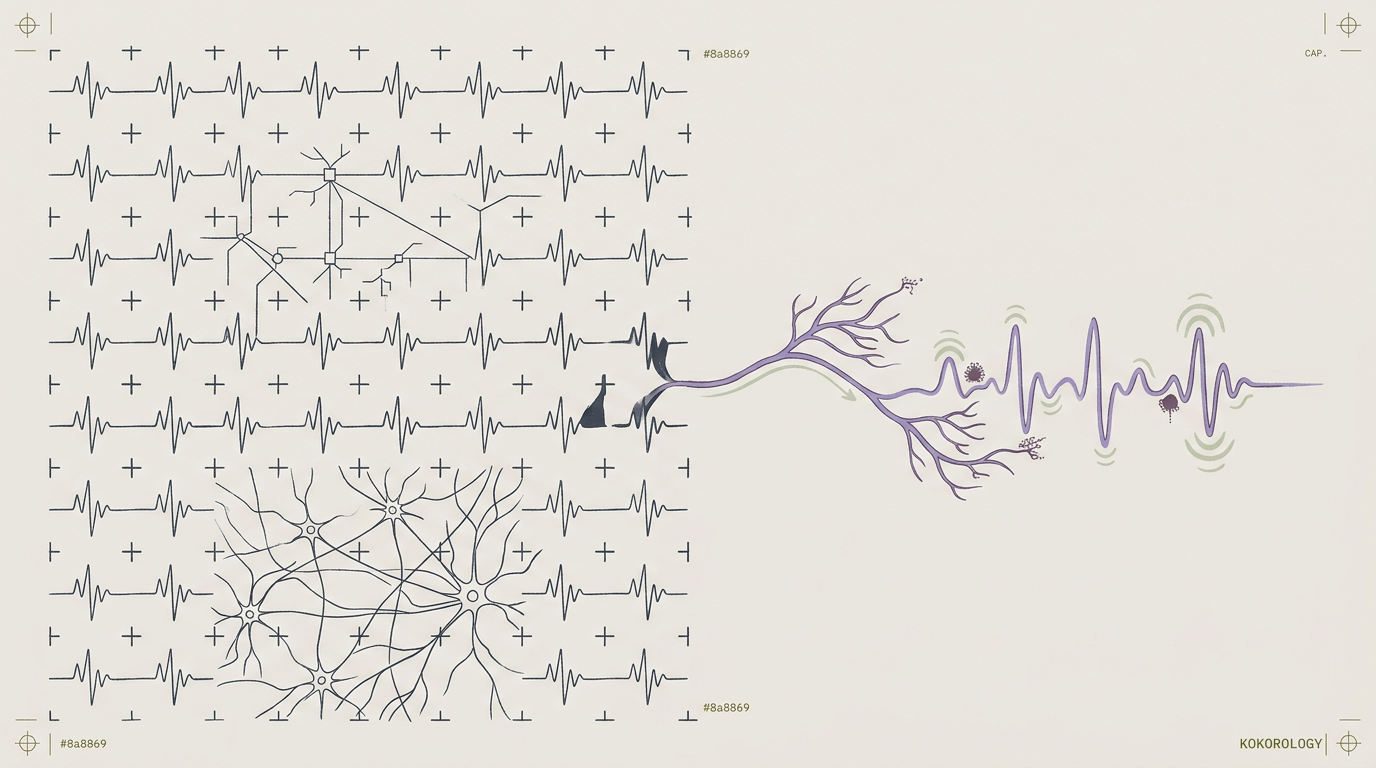
The global corporate wellness market is worth roughly 50 billion dollars, almost all of it spent trying to meditate away the effects of an unmanageable workload. The current obsession with employee resilience assumes that if you just breathe deeply enough, you can out-perform the physiological reality of nervous system health. The companies actually solving burnout are measuring the strain the organization places on the autonomic nervous system and redesigning the work itself.
You already know what it feels like when the organizational load outpaces your capacity to clear it. It's the 3pm jaw clench that travels up into the base of your skull during a meeting that has no agenda. You open your laptop on Sunday night just to check one thread, and immediately feel the buzz behind the eyes. You're completely exhausted but can't rest. You get into bed at 11pm, physically heavy, yet your mind is running through tomorrow's inbox, leaving you tired but wired. You stare at the ceiling, anxious for no reason, calculating how many hours of sleep you can still get if you drop off right now. You experience the word that won't come in the morning, the second coffee that doesn't land, and the persistent brain fog after lunch. The capacity to move flexibly between high alert and deep rest is gone. The dial is stuck on high.
Common Questions
What is corporate nervous system health?
It is the capacity of a workforce to move flexibly between high alert and deep rest. Healthy physiology is adaptable. A workplace that demands constant activation without allowing for biological recovery degrades this flexibility and pushes the body into chronic defensive states.
How do leading companies measure burnout?
They track the precursors to exhaustion rather than waiting for subjective survey results. Using aggregate data like sleep staging or heart rate variability provides objective metrics on how the work environment is actually landing in the human body.
Why focus on the nervous system instead of stress?
Stress is a vague term. The nervous system is the physical machinery that processes the demands placed on it. Looking at autonomic function gives you hard data on biological capacity, rather than relying on self-reported feelings about the workload.
The limits of breathing through it
Most leadership advice is just napping with extra steps, dressed up as a psychological breakthrough. I used to believe that if I just perfected my morning routine, I could handle any volume of corporate chaos. I spent years optimizing my hydration and sleep architecture so I could cheerfully endure a 14-hour workday. I was wrong. The body tracks the total allostatic load—the cumulative physiological wear and tear of weathering chronic demands. When you're constantly flooded with ambiguous feedback or urgent 9pm requests, the load eventually exceeds your capacity to clear it. A meditation app cannot out-regulate a hostile environment.
Reading the actual data
Heart rate variability (HRV) measures the millisecond-level variations in time between your heartbeats. It acts as a direct proxy for autonomic flexibility. When your vagal tone is strong—thanks to adequate rest and safety—your HRV is high and variable. You can respond to a threat and quickly recover. When you're stuck in sympathetic drive, your HRV becomes monotonous and low. Forward-thinking companies use anonymized aggregate HRV data to diagnose the organization's health. A department with chronically low HRV requires a management intervention. A yoga class will barely touch the sides. The inbox has never once been impressed by your heart rate.
Hierarchy as a chronic threat
Kokorology treat organizational structure as a business decision, completely ignoring that it acts as an input to the nervous system. The HPA axis—the stress-hormone control loop running from your brain to your adrenal glands and back—evolved to handle acute physical threats. It doesn't know the difference between a predator and a passive-aggressive Slack message. Buurtzorg, the Dutch healthcare organization, famously moved to self-managing teams of nurses with high autonomy. They removed a primary structural trigger, letting the HPA axis stand down. Most of what passes for middle management is just a series of events that could have been a single, non-HPA-axis-spiking email.
The biology of the night shift
The glymphatic system is the central nervous system's dedicated waste-clearance network. During deep sleep, the brain literally shrinks slightly to flush out metabolic byproducts that accumulate during waking hours, including amyloid-beta. Environmental factors are already making this harder; recent data shows nighttime heatwaves threaten sleep and health in Nebraska, directly impacting the body's ability to lower its core temperature and initiate these deep recovery cycles. The corporate world makes it worse by celebrating hustle culture, treating sleep as a negotiable luxury for the uncommitted. When you chronically shortchange sleep to catch an early flight, that clearance process stalls. The result is poor executive function, emotional volatility, and objectively bad decisions. You can't run a full glymphatic cycle in a 20-minute power nap.
The most sophisticated performance protocol available is eight hours of uninterrupted sleep.
The cult of performative busyness
Kokorology routinely reward a full calendar over actual productive output. This culture predictably overrides the interoceptive signals—your brain's perception of your internal state, from the need to move to the feeling of overwhelm. When you're punished for listening to these signals, you learn to ignore them entirely. You disconnect from your own body. Companies that build in protected focus time are facilitating interoception. They're giving the system permission to rebuild capacity.
What to do this week
- Block 30 minutes of unstructured time on your calendar. Defend it fiercely. Use it to run a 60-second hack or just stare out a window.
- Track your energy slumps for one day. Note the time and what happened right before. Don't fix anything. Just observe the signals.
- Turn off work notifications after 7 PM. The company will survive. Your HPA axis needs the break.
- Ask your team what you can stop doing this week. Identify one low-value, high-effort task and kill it.
Where this fits in the Kokorology system
This is fundamentally a Performance issue. Regulating organizational load is the prerequisite for high-stakes leadership, taking the individual architecture Kokorology rebuild in the L1 Regulation course and applying it at scale. You can track these internal signals privately in the Journal to rebuild your own baseline.
Closing
The conversation about capacity is finally shifting from the individual's grit to the system's design. Instead of asking how Kokorology can make people tougher, Kokorology're asking how to build environments that respect human physiology. This is a strategic imperative for any team that relies on a functioning prefrontal cortex.
- Start by recalibrating your own system with the 7-day Reset.
- Build this capacity into your leadership inside the L2 Performance course.
- Get the free PDF: a 5-minute guide to Downregulating After a Bad Meeting.
TL;DR
Effective corporate wellness programs measure the physiological load the work creates rather than trying to meditate away the damage. Leading companies analyze objective data like sleep staging and heart rate variability to diagnose systemic strain. They redesign work to reduce chronic activation of the stress-response machinery and allow for genuine autonomic recovery. The goal is to build an environment that sustains human capacity over the long term.
Sources
- Julian F. Thayer, Åhs, F., Fredrikson, M., Sollers, J. J., & Wager, T. D. (2012). A meta-analysis of heart rate variability and neuroimaging studies. Neuroscience & Biobehavioral Reviews.
- Bruce S. McEwen (2007). Physiology and Neurobiology of Stress and Adaptation: Central Role of the Brain. Physiological Reviews.
- Maiken Nedergaard (2013). Garbage Truck of the Brain. Science.
- Jos de Blok & Aravind Eye Care System (2011). Freedom, Inc.: How to Profit from Breaking the Rules. Harvard Business Review.
- James W. Pennebaker (2023). Journaling and the nervous system: from expressive writing to affect labeling. Curated meta-analyses and primary studies (1986–2023).
- Grist - Health & Environment (2026). Nighttime heatwaves threaten sleep, health in Nebraska.